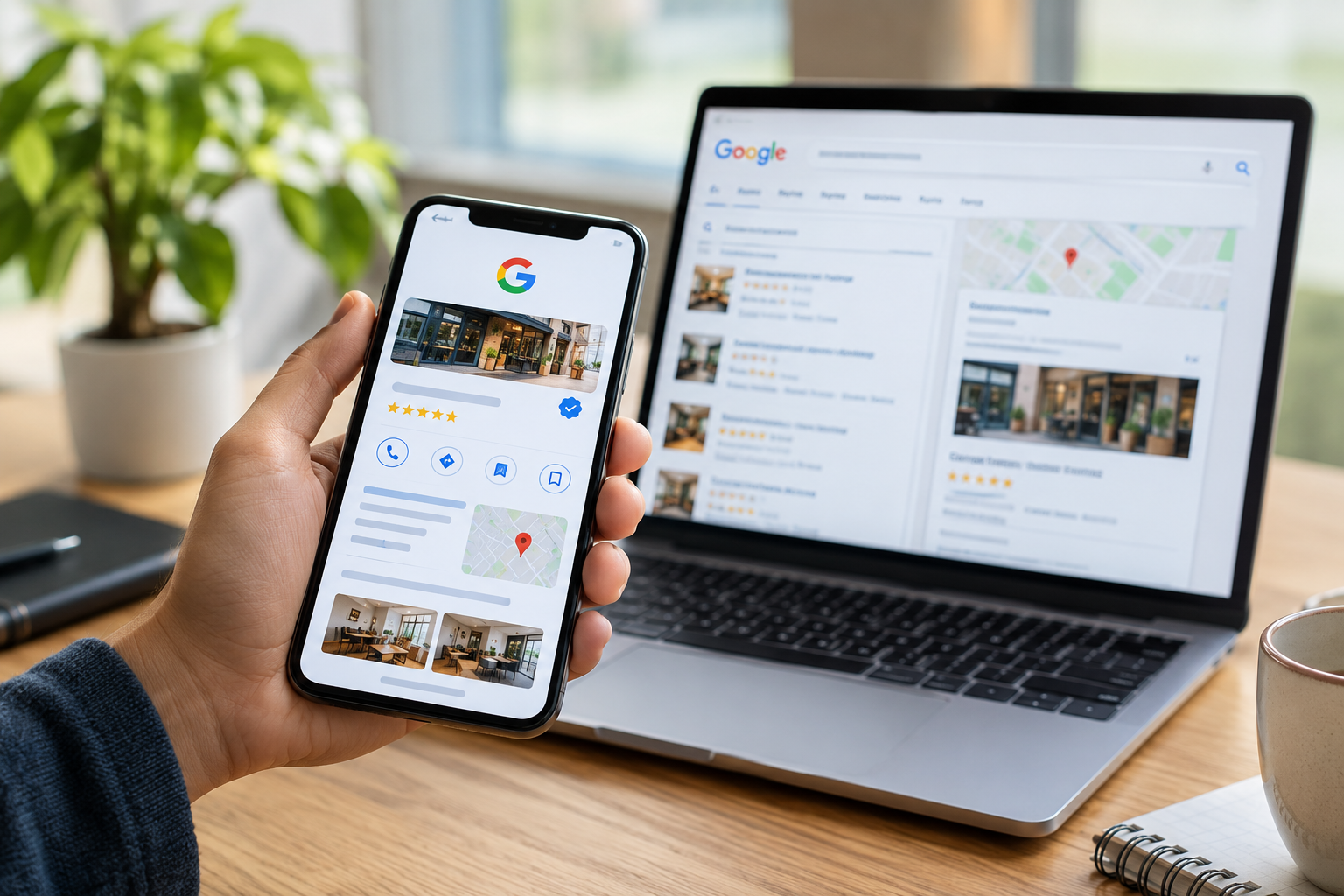
Google Search Profile Badges Expose the Publisher Traffic Crisis: What Businesses Need to Know About SEO
Google Search Profile Badges Expose a Bigger Change in Search
For years, the basic SEO model was simple:
Google Search → Website → Click → Visitor → Lead or Customer
Businesses and publishers invested in SEO because ranking on Google could send valuable traffic directly to their websites.
But search is changing.
Google is increasingly becoming a destination where users can discover information, interact with content, follow creators and businesses, and sometimes get answers without visiting the original website.
One of the latest developments is Google Search Profiles and Search Profile Badges.
Google introduced Search Profiles as a way for publishers and creators to create a dedicated presence on Google Search, bringing together content from websites and social platforms. Users can follow these profiles, and Google says followed content can become more likely to appear in those users’ Google Discover feeds.
Google has also published documentation explaining how eligible publishers and creators can add a Search Profile badge to their websites so visitors can discover and follow their Google Search Profile.
At first glance, this may look like a small new Google feature.
But there is a much bigger SEO lesson behind it:
Search visibility is increasingly about building a recognizable entity, audience and trusted presence—not simply getting website clicks.
And this is especially important for local businesses.
What Are Google Search Profile Badges?
A Google Search Profile Badge is a badge or link that publishers and creators can place on their websites to help people discover their Google Search Profile.
Google describes Search Profiles as a centralized destination that can bring together content from a website and social platforms such as:
- YouTube
- TikTok
- X
- Website content
The idea is to make it easier for people to find and follow a creator or publisher across Google’s ecosystem.
Google’s documentation provides an official badge implementation as well as a text-link alternative that can be used in places such as article by lines, newsletters and bio links.
This represents an important change in how we should think about search.
Previously, the primary objective was:
Get the click.
Increasingly, the objective can become:
Get discovered → Get recognized → Get followed → Build a relationship.
Why Are Publishers Worried About Traffic?
The traditional web business model depends heavily on referral traffic.
A publisher creates an article.
Google indexes it.
Someone searches for a topic.
The article appears in the search results.
The user clicks.
The publisher gets a visitor.
That visitor may then:
- Read an article
- View advertisements
- Buy a product
- Subscribe to a newsletter
- Register for a service
- Visit another page
- Become a customer
But AI-powered search experiences are changing this journey.
Google now increasingly provides information directly within the search experience through features such as AI Overviews and AI Mode.
That creates an important question:
If users get enough information directly from the search page, why would they click through to a website?
Recent experimental research examining Google’s AI Search experiences found that removing AI Overviews and AI Mode increased click-through rates to publishers, while an AI Mode-only experience reduced publisher click-through rates.
This doesn’t mean websites are disappearing.
It means the value of a website visit may no longer be the only measurement of search success.
The Shift From Website Traffic to Search Visibility
The SEO industry has traditionally focused on metrics such as:
- Organic traffic
- Keyword rankings
- Click-through rate
- Backlinks
- Sessions
- Page views
These metrics remain useful.
However, businesses increasingly need to think about another layer:
What happens when someone searches for your business but doesn’t click your website?
For example, imagine someone searches:
“Digital marketing agency near me”
They may see:
- Google Maps results
- Google Business Profiles
- Reviews
- Phone numbers
- Directions
- Services
- Photos
- Website links
- Social profiles
The customer might call the business directly.
Or they might request directions.
Or they might send a message.
Or they might visit the physical location.
In such cases, the website may receive no click—but the search still generated a business opportunity.
That is why local SEO and Google Business Profile optimization have become increasingly important.
What Is Google Business Profile?
Google Business Profile, commonly called GBP and still frequently referred to as GMB (Google My Business), is Google’s business listing system for eligible businesses.
A Business Profile can appear across Google Search and Google Maps.
Google describes the Business Profile as a way for businesses to control how their business appears on Google Search and Maps, including information such as photos, reviews and business details.
For eligible local businesses, this creates an important search asset.
Instead of forcing every potential customer to visit a website first, businesses can provide important information directly within Google.
Depending on the business and available features, customers may be able to see:
- Business name
- Category
- Address
- Service area
- Opening hours
- Phone number
- Website
- Photos
- Reviews
- Services
- Products
- Updates
- Appointment or ordering links
This means Google Business Profile SEO is not simply about “ranking a map listing.”
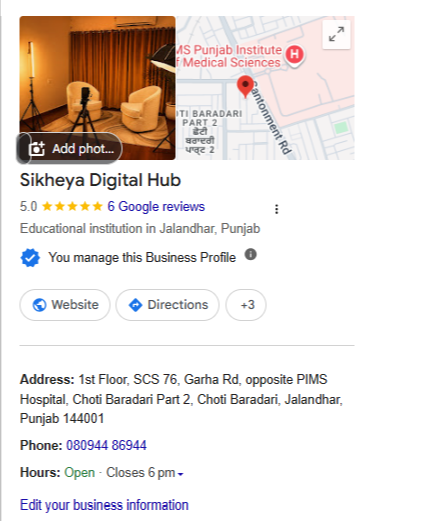
It is about making your business information useful, accurate and trustworthy wherever customers encounter it.
Google Business Profile SEO vs Traditional SEO
There is an important difference.
Traditional SEO
Traditional SEO generally focuses on improving a website’s visibility in organic search results.
The process may include:
Keyword Research → Content → Technical SEO → Internal Linking → Authority → Rankings → Website Traffic
Google Business Profile SEO
Local SEO focuses heavily on how a business appears for relevant local searches.
The process can include:
Business Information → Categories → Services → Reviews → Photos → Website Signals → Local Relevance → Customer Actions
Google says local results are primarily based on relevance, distance and prominence. Google also recommends keeping business information complete and accurate, responding to reviews, and adding photos and videos.
This is why simply creating a Google Business Profile is not the same thing as having a properly optimized local presence.
Why Google Business Profile Optimization Matters
Suppose you run a:
- Digital marketing agency
- SEO agency
- Coaching center
- Salon
- Restaurant
- Dentist clinic
- Real estate agency
- Photographer
- Clothing store
- Repair service
- Home service business
Your potential customers may search for your services without ever knowing your brand name.
For example:
“SEO company near me”
“digital marketing agency in [city]”
“Google business profile SEO services”
“best local SEO agency”
“SEO expert near me”
These are discovery searches.
The customer is not necessarily looking for your company yet.
They are looking for a solution.
A properly managed Google Business Profile can help your business participate in these local discovery journeys.
Google Business Profile Is More Than an Online Address
Many businesses make the mistake of treating their Google Business Profile like an online visiting card.
They create the profile and then forget about it.
But Google itself recommends maintaining accurate business information and using features such as reviews, photos and business updates.
Think of your profile as a mini digital storefront.
Your website is your full office.
Your Google Business Profile is the storefront customers see while walking through Google’s search ecosystem.
If the storefront looks incomplete, outdated or confusing, the customer may continue searching.
7 Important Areas of Google Business Profile SEO
1. Accurate Business Information
The foundation of local SEO is accurate information.
Make sure your profile consistently communicates:
- Correct business name
- Correct category
- Correct address, where applicable
- Accurate service area
- Correct phone number
- Website
- Business hours
- Special hours
Google’s guidelines emphasize accurately representing the business as it exists in the real world.
Consistency matters because Google can use information from multiple sources when building local search results.
Google says business information can come from the business owner, public web content, third-party data, user contributions and other sources.
2. Choose the Right Business Category
Your primary category helps Google understand what your business actually does.
For example, a business shouldn’t choose a category simply because it contains a popular keyword.
The category should accurately represent the real business.
Think about the question:
“If Google had to describe this business in one category, what would be the most accurate answer?”
That is a much better starting point than trying to manipulate categories for rankings.
3. Optimize Your Services
Services are particularly important for service businesses.
For example, a digital marketing agency might offer:
- Local SEO
- Google Business Profile Optimization
- Website SEO
- Google Maps SEO
- On-Page SEO
- Technical SEO
- Content Marketing
- Social Media Marketing
Clearly communicating services helps potential customers understand what the business offers.
It also gives Google additional context about the business.
4. Build a Genuine Review Strategy
Reviews are one of the most visible elements of many local search experiences.
But businesses should focus on obtaining genuine customer feedback, not fake or manipulated reviews.
A good review strategy can include:
- Delivering a strong customer experience
- Asking customers for honest feedback
- Making the review process easy
- Responding professionally
- Learning from negative feedback
- Avoiding incentives or fabricated reviews
Google notes that reviews and positive ratings can contribute to local prominence.
The objective should not simply be to collect stars.
The objective should be to build real customer trust.
5. Add High-Quality Photos and Videos
Visual content can help potential customers understand the business before contacting it.
Depending on the business type, useful content may include:
- Office photographs
- Store photographs
- Product photographs
- Team photographs
- Before-and-after work
- Completed projects
- Interior photographs
- Service demonstrations
- Behind-the-scenes content
Google specifically recommends adding photos and videos to Business Profiles.
For a local business, authentic visual proof can be more useful than generic stock photography.
6. Keep Your Website and Google Profile Connected
Your Google Business Profile and website should tell the same business story.
For example:
Google Business Profile
Digital Marketing Agency
Local SEO
Google Business Profile SEO
Website SEO
Website
Digital Marketing Services
Local SEO Services
Google Business Profile Optimization
SEO Packages
When your online presence consistently communicates what the business does, customers and search engines have more context.
Google also explains that it can use information from a business’s official website when compiling Business Profile information.
7. Use Relevant Business Links
Google Business Profiles can provide links that help customers take actions directly from Search or Maps.
Depending on eligibility and category, these can include links related to:
- Booking
- Ordering
- Services
- Menus
- Shopping
- Other customer actions
Google’s documentation explains that Business Profiles can contain links that help customers take actions directly from Search or Maps.
This is another example of the changing search journey.
The customer doesn’t always need to visit ten pages on your website before taking action.
The New Local SEO Funnel
The old funnel looked like this:
Google Search
↓
Website
↓
Contact Page
↓
Lead
But local search can look more like this:
Google Search
↓
Google Business Profile
↓
Reviews + Photos + Services + Location
↓
Call / Message / Directions / Website
↓
Customer
This is why businesses should not judge local SEO exclusively by website traffic.
Sometimes the most valuable action happens directly inside Google.
What the Publisher Traffic Crisis Can Teach Local Businesses
The publisher traffic conversation contains a lesson for every business owner:
Don’t build your entire digital strategy around one type of traffic.
If your business depends only on organic website clicks, changes in search behavior can affect you.
Instead, build a broader digital presence.
For example:
Website
Your owned digital property.
Google Business Profile
Your local search presence.
Your visual and social discovery channel.
YouTube
Your educational and video discovery channel.
Your conversation and conversion channel.
Your direct audience relationship.
The goal is not to abandon SEO.
The goal is to make SEO part of a larger digital ecosystem.
Why Local Businesses Need a Strong Google Presence
Search behavior is becoming increasingly fragmented.
Customers may discover a business through:
- Google Search
- Google Maps
- AI-powered search experiences
- YouTube
- TikTok
- Recommendations
- Reviews
Therefore, your business needs consistent information across the web.
Google itself explains that information from multiple sources can contribute to what appears in Business Profiles and local search.
This creates an important SEO principle:
Don’t optimize only one page.
Optimize your entire digital presence.
GMB SEO Services: What Should a Professional Service Include?
If you’re looking for GMB SEO services, don’t evaluate a provider only by promises such as:
“Rank #1 on Google Maps.”
Google explicitly says there is no way to request or pay Google for a better local ranking, and that its local ranking systems primarily consider relevance, distance and prominence.
A professional Google Business Profile SEO service should instead focus on legitimate optimization and measurable business outcomes.
A typical service can include:
Google Business Profile Audit
Review the existing profile for:
- Completeness
- Accuracy
- Category selection
- Services
- Business information
- Photos
- Reviews
- Website connection
- Local search opportunities
Google Business Profile Optimization
Improve the profile using accurate and relevant information.
Local Keyword Research
Identify relevant searches customers actually use.
Examples:
- SEO agency near me
- digital marketing agency in [city]
- Google Business Profile SEO services
- local SEO company
- SEO expert in [city]
Local Content Strategy
Create useful website content targeting relevant local and service-based searches.
Review Management
Create a process for generating genuine customer feedback and responding professionally.
Photo & Content Strategy
Help businesses maintain a fresh, authentic visual presence.
Local Citation & NAP Consistency
Review business information across relevant online directories and platforms.
Performance Tracking
Monitor meaningful metrics such as:
- Search visibility
- Profile interactions
- Calls
- Website clicks
- Direction requests
- Customer actions
- Search queries
The exact metrics available depend on Google’s current reporting and the business’s profile.
What Businesses Should NOT Expect From GMB SEO
There are many unrealistic promises in the local SEO industry.
Be careful with claims such as:
“Guaranteed #1 Google Maps ranking.”
“Permanent ranking guarantee.”
“We can pay Google to rank your profile.”
“100% guaranteed leads.”
Google itself states that businesses cannot request or pay for better local ranking.
SEO is an optimization process, not a guaranteed position.
Local rankings can vary depending on:
- Searcher’s location
- Search query
- Competition
- Business relevance
- Business prominence
- Search context
- Google’s systems
A responsible SEO strategy should therefore focus on improving visibility, relevance and customer experience rather than making impossible guarantees.
Google Search Profile Badges vs Google Business Profile
These two concepts are easy to confuse.
| Feature | Google Search Profile | Google Business Profile |
|---|---|---|
| Primary audience | Publishers & creators | Eligible businesses |
| Main purpose | Build a creator/publisher presence on Search | Connect businesses with local customers |
| Content | Articles, videos, social content | Business information, services, photos, reviews |
| Search ecosystem | Google Search / Discover | Google Search / Maps |
| Follow functionality | Yes, for eligible Search Profiles | Different business/customer interactions |
| Local SEO focus | Not primarily local | Strong local search relevance |
| Best for | Creators and publishers | Local/service-area businesses |
Google’s Search Profile documentation specifically describes Search Profiles as a centralized destination for content across the web and social platforms.
Google Business Profile, on the other hand, is designed to help eligible businesses appear across Search and Maps and connect with customers.
What This Means for SEO Agencies
The SEO industry itself is changing.
A few years ago, an SEO agency could primarily sell:
“We will increase your Google rankings.”
Today, businesses increasingly need a more complete visibility strategy.
That can include:
Local SEO
Google Business Profile Optimization
Website SEO
Content
Reviews
Social Media
Conversion Optimization
Customer Communication
The question is no longer only:
“What keyword do you rank for?”
It is also:
“What does a customer see when they search for your business?”
That is a much more useful business question.
How Sikheya Digital Hub Approaches GMB SEO
At Sikheya Digital Hub, Google Business Profile SEO can be approached as part of a complete digital marketing strategy rather than as a simple profile-editing task.
For a local business, the process can begin with understanding:
Business → Location → Services → Target Customers → Search Intent → Google Business Profile → Website → Content → Reviews → Conversion
The objective is to create a consistent digital presence that helps potential customers understand:
- Who you are
- What you offer
- Where you operate
- Why customers should consider you
- How they can contact you
- What other customers say about you
This approach is especially useful for small businesses that want to compete for local searches without depending entirely on paid advertising.
Who Can Benefit From Google Business Profile SEO?
GMB/GBP SEO can be relevant for many types of businesses that are eligible for a Business Profile, including:
Local Shops
- Clothing stores
- Boutiques
- Jewellery stores
- Electronics stores
- Furniture stores
Professional Services
- Digital marketing agencies
- Accountants
- Lawyers
- Consultants
- Photographers
Local Service Businesses
- Plumbers
- Electricians
- Repair services
- Cleaning companies
- Home improvement businesses
Health & Wellness Businesses
- Clinics
- Dentists
- Salons
- Fitness centers
- Wellness businesses
Food Businesses
- Restaurants
- Cafes
- Bakeries
- Cloud kitchens where eligible
The exact eligibility requirements depend on Google’s Business Profile policies. Google generally requires businesses to interact with customers either at a physical location or by traveling to customers where they are.
The Future of SEO Is Bigger Than Rankings
The biggest lesson from the rise of Search Profiles and AI-powered search is that the traditional definition of SEO is becoming too narrow.
SEO used to mean:
Get ranked.
Then it became:
Get ranked and get clicks.
Now businesses need to think about:
Get discovered → Build trust → Become recognizable → Create an action → Build a customer relationship.
That action might be:
- Website visit
- Phone call
- WhatsApp conversation
- Store visit
- Booking
- Product purchase
- Follow
- Review
- Direction request
Search visibility is becoming increasingly connected to the complete customer journey.
Final Thoughts
Google Search Profile Badges may look like a small feature, but they represent a larger evolution in how Google connects users with publishers and creators.
At the same time, AI-powered search is changing how people consume information and how often they click through to traditional websites. Recent research provides experimental evidence that some AI Search experiences can reduce publisher referrals.
For businesses, the lesson is not to stop investing in websites or traditional SEO.
Instead, it is to build a stronger and more diversified search presence.
For local businesses, that means paying serious attention to:
Google Business Profile
Local SEO
Website SEO
Reviews
Content
Social Media
Customer Experience
Conversion
Your Google Business Profile should not simply exist.
It should accurately represent your business, help customers understand what you offer, and make it easy for them to take the next step.
If you’re searching for GMB SEO services, Google Business Profile SEO, Google Maps SEO or local SEO services, the right starting point is a complete audit of your current Google presence and local search strategy.
Frequently Asked Questions About GMB SEO
What is GMB SEO?
GMB SEO is the commonly used term for optimizing a Google Business Profile to improve a business’s visibility and usefulness in relevant local searches. Google now officially calls the product Google Business Profile rather than Google My Business.
Is Google Business Profile free?
Yes. Google states that creating a Business Profile is free.
Can GMB SEO guarantee a #1 ranking?
No legitimate provider should promise a guaranteed #1 Google local ranking. Google states that businesses cannot request or pay for better local ranking.
What is the difference between GMB and GBP?
GMB stands for Google My Business, the older name. Google Business Profile (GBP) is the current name for the product.
Does Google Business Profile help local SEO?
A properly maintained Business Profile can help businesses participate in Google’s local Search and Maps ecosystem. Google says local results are primarily based on relevance, distance and prominence.
Should a business have a website if it has a Google Business Profile?
Yes. A Google Business Profile and a website serve different purposes. Your profile can help customers discover and evaluate the business, while your website can provide deeper information, content, services and conversion opportunities.
What are Google Search Profile Badges?
They are badges or links that eligible publishers and creators can add to their websites to help audiences find their Google Search Profile.
Ready to Improve Your Local Search Presence?
If your business is not getting enough visibility from Google Search or Google Maps, the first step is not blindly adding keywords.
Start with a proper audit.
Look at your:
Google Business Profile + Website + Local SEO + Reviews + Services + Content + Customer Journey
A stronger digital presence begins with understanding what Google and your customers can currently see.
Sikheya Digital Hub can help businesses understand and improve their digital marketing and local search presence through practical SEO and digital marketing strategies.

Sikheya Digital Hub is a digital marketing institute and agency helping students, entrepreneurs and businesses learn and implement digital marketing, AI, social media marketing, SEO and online growth strategies.
Expertise
Digital Marketing
SEO
Social Media Marketing
Meta Ads
Google Ads
AI & Automation
Content Marketing