Digital Marketing Is Changing: Which Skills Will Still Matter in the AI Search Era?
Digital marketing is not disappearing because of AI. But the definition of a good digital marketer is changing.
For years, learning digital marketing meant understanding a fairly familiar set of skills: SEO, Google Ads, Facebook Ads, social media marketing, content creation, email marketing and analytics.
Those skills still matter.
What has changed is how these skills are used, how customers discover businesses, how people search for information, and how marketers are expected to think.
A person who knows how to publish a blog is not automatically an SEO professional.
Someone who knows how to launch a Meta Ads campaign is not automatically a performance marketer.
And someone who can generate content with AI is not automatically a digital marketer.
The real value is increasingly moving from knowing individual tools to understanding how marketing systems work.
That is why anyone planning to learn digital marketing today should ask a different question.
Not:
“Which digital marketing course should I take?”
But first:
“Which digital marketing skills will actually remain valuable as search, advertising, content and customer behaviour continue to change?”
This article explores that question in detail.
The Digital Marketing Landscape Has Changed
The internet has never been static.
Digital marketing itself has already gone through several major transformations.
In the early days, businesses focused heavily on websites, banner advertising and email.
Then search engines became a major source of discovery. SEO became an important discipline because businesses wanted their websites to appear when people searched for relevant products and services.
Social media then changed the environment again.
Facebook, Instagram, YouTube and other platforms created new ways for businesses to attract attention, build communities and generate demand.
Paid advertising became more sophisticated. Search advertising evolved. Social advertising became highly targeted. Analytics became more important.
Now another major shift is happening.
AI is becoming part of the discovery and decision-making process.
Google’s AI Overviews and AI Mode are examples of this change. Google describes AI Mode as an experience designed for more complex and exploratory questions, including follow-up questions and links to relevant web content. Google also says its AI Search experiences use techniques such as query fan-out to explore related subtopics across multiple searches.
This changes the environment for marketers.
People may still type:
“Best digital marketing course”
But they may also ask:
“I am a beginner with no technical background. I want to learn digital marketing so I can get a job within a year. Which skills should I learn first, and which ones are still valuable despite AI?”
That is not simply a keyword.
It is a decision-making problem.
And modern search is becoming increasingly capable of understanding that kind of problem.
AI Is Not Replacing Digital Marketing. It Is Raising the Standard.
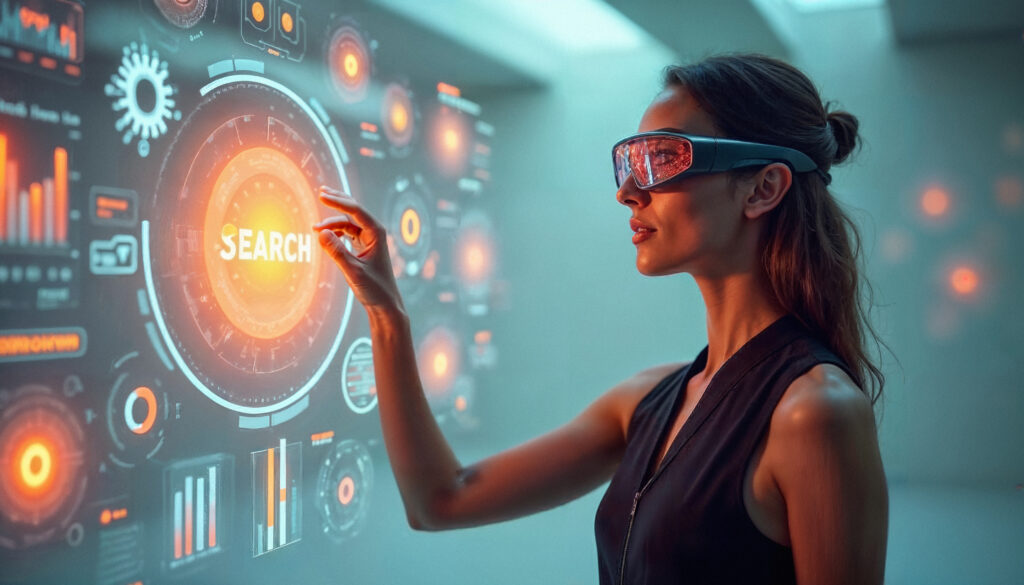
There is a common assumption that AI will eventually automate most digital marketing work.
That conclusion is too simplistic.
AI can already help marketers with research, brainstorming, summarisation, content creation, data analysis, image generation, campaign ideas and repetitive tasks.
But marketing has never been simply about producing outputs.
Marketing starts with understanding.
Who is the customer?
What problem are they trying to solve?
What alternatives are they considering?
Why would they trust one brand instead of another?
What information do they need before making a decision?
What message will make sense to them?
Where are they discovering the business?
What happens after they click?
What prevents them from converting?
AI can accelerate many of these activities.
It does not eliminate the need to understand them.
In fact, as content production becomes easier, strategic thinking becomes more valuable.
If everyone can generate ten blog posts in ten minutes, simply generating ten blog posts is no longer a meaningful competitive advantage.
The advantage becomes knowing what should be created, why it should be created, who it is for, what evidence supports it, where it should appear and how its performance should be measured.
That is the direction in which digital marketing skills are moving.
So, Which Digital Marketing Skills Will Still Matter?
The answer is not one particular tool.
The most valuable future-facing digital marketers will probably be those who combine marketing fundamentals, channel expertise, analytical thinking, customer understanding and AI literacy.
Let’s look at the major skill areas.
1. Marketing Fundamentals Will Become More Important, Not Less
Before learning SEO, Meta Ads, Google Ads or AI tools, a marketer needs to understand marketing itself.
This sounds obvious, but it is one of the biggest gaps in practical digital marketing education.
A person can learn how to create a Facebook campaign without understanding positioning.
They can learn keyword research without understanding customer intent.
They can learn Canva without understanding communication.
They can use AI to write an advertisement without understanding why someone should care about the offer.
Tools can teach execution.
Marketing fundamentals teach decision-making.
A strong digital marketer should understand concepts such as customer needs, value propositions, positioning, market research, buyer journeys, offers, messaging, conversion and customer acquisition.
These concepts are not dependent on a particular platform.
Google can change its interface.
Meta can change its advertising system.
AI tools can change completely.
But the fundamental question remains:
Why would this customer choose this business?
That is why marketing fundamentals are likely to remain foundational even in an AI-heavy environment.
2. SEO Is Changing — But It Is Not Disappearing
SEO is probably one of the areas where the biggest misunderstanding exists.
Whenever AI Search becomes a major topic, someone inevitably says:
“SEO is dead.”
That is not a useful way to understand what is happening.
Search behaviour is changing.
Search interfaces are changing.
The way information is presented is changing.
But people still need information, products, services and answers.
Google’s own current guidance around AI Search continues to emphasise the importance of foundational SEO and high-quality web content. Google also says its AI experiences are designed to help people discover and visit useful websites.
What is changing is the definition of good SEO.
Old-school thinking often reduced SEO to:
keyword → article → backlinks → ranking
Modern SEO requires a much broader understanding.
A marketer increasingly needs to think about search intent, information architecture, technical accessibility, topical coverage, entities, context, internal linking, useful content, original information and the overall experience a website provides.
This is where concepts such as Semantic SEO, Entity SEO and Topical Authority become important.
The objective is not simply to repeat a phrase on a page.
The objective is to make the website genuinely useful and understandable within a topic.
That distinction matters enormously in an AI-powered search environment.
Related Blog: SEO Course in Jalandhar: Fees, Syllabus, Career Opportunities & Placements
3. Search Intent Will Matter More Than Keyword Volume
One of the biggest shifts in SEO is the movement from keyword thinking to intent thinking.
Consider the query:
“digital marketing course”
What does the person actually want?
They might want a definition.
They might be looking for a course.
They might want course fees.
They might be comparing institutes.
They might want a course near their city.
They might be researching career opportunities.
The keyword alone doesn’t tell you everything.
Now consider:
“I am a working professional with two hours available each evening. Should I learn digital marketing through an online course or join a classroom program?”
This is a much richer question.
A modern marketer needs to understand the problem behind the search.
That means learning how to identify informational, commercial, transactional and navigational intent—and, more importantly, understanding the journey connecting them.
This skill will remain useful regardless of whether the user searches through Google, AI Mode, voice, a social platform or another discovery system.
4. Content Strategy Will Matter More Than Content Production
AI has dramatically reduced the difficulty of producing text.
That creates a problem.
When content becomes cheap, bad content becomes abundant.
The result is that publishing more content does not automatically create more authority.
The marketer needs to answer better questions.
What topic deserves a page?
What does the audience actually want to know?
What has already been said?
What is missing?
What original experience, data, examples or perspective can the business provide?
How should different pieces of content connect?
Which content supports discovery?
Which content supports consideration?
Which content supports conversion?
That is content strategy.
An AI tool can help generate a draft.
But a marketer needs to decide whether the draft deserves to exist.
Google has also been emphasizing original and non-commodity content in its recent guidance around generative AI Search.
That makes editorial judgment increasingly valuable.
5. Entity SEO and Topical Authority Are Becoming More Important
Traditional SEO often encourages people to think in terms of individual keywords.
Modern search increasingly requires thinking about topics, relationships and entities.
Suppose you want to build authority around digital marketing.
You cannot reasonably expect one page targeting “digital marketing course” to establish deep expertise around the entire subject.
A stronger topical ecosystem could cover:
Digital marketing fundamentals.
SEO.
Technical SEO.
Content SEO.
Semantic SEO.
Entity SEO.
Local SEO.
Google Ads.
Meta Ads.
Content marketing.
Copywriting.
Conversion optimisation.
Analytics.
AI marketing.
AI Search.
E-commerce marketing.
Marketing strategy.
Career skills.
These topics are connected.
A strong website can explain those connections through its internal linking and content architecture.
This is why modern SEO is increasingly becoming an information architecture problem, not merely a keyword placement exercise.
6. AI Literacy Will Become a Core Marketing Skill
This does not mean every marketer needs to become an AI engineer.
They don’t.
But a modern digital marketer should understand how to work effectively with AI.
That includes using AI for research, idea generation, content workflows, customer analysis, competitive research, campaign analysis and repetitive marketing tasks.
More importantly, marketers need to understand the limitations of AI.
AI can produce convincing information that is incomplete or incorrect.
It can flatten a brand’s voice.
It can produce generic content.
It can make unsupported assumptions.
It can encourage marketers to create large amounts of content without a meaningful strategy.
Therefore, the valuable skill is not:
“I know ChatGPT.”
The valuable skill is:
“I know when, where and how AI should be used in a marketing workflow—and where human judgment is still necessary.”
That is a much more durable skill.
7. Paid Advertising Will Still Matter — But Button-Clicking Is Not Enough
Google Ads and Meta Ads are not disappearing because AI is becoming more powerful.
Advertising platforms themselves are using more automation and machine learning.
That means some manual campaign-management tasks may become less important over time.
But the marketer still needs to understand:
What is the objective?
Who is the audience?
What is the offer?
What creative should be tested?
What landing page should receive the traffic?
What conversion should be measured?
What does the data actually tell us?
Why is one campaign outperforming another?
What should change next?
The difference is between platform operator and performance marketer.
A platform operator knows where to click.
A performance marketer understands the business system behind the clicks.
The second skill is considerably more transferable.
8. Conversion Optimization Will Become More Valuable
Getting traffic is only one part of marketing.
If 10,000 people visit a website but nobody takes action, traffic alone has limited business value.
This is why digital marketers need to understand conversion.
A visitor might:
- purchase a product,
- submit a lead form,
- call a business,
- send a WhatsApp message,
- book a consultation,
- subscribe to a service,
- download a resource,
- or take another meaningful action.
The marketer needs to understand the relationship between:
traffic → landing page → message → trust → offer → action
This is where copywriting, landing-page strategy, user experience and conversion optimisation become important.
AI can help write copy.
But someone still needs to understand why the copy should work.
9. Analytics and Measurement Will Remain Essential
Marketing without measurement quickly becomes guesswork.
A modern marketer should be comfortable with data.
Not necessarily advanced statistics.
But enough to answer practical questions.
Where did the traffic come from?
Which channel generated leads?
Which campaign produced qualified leads?
Which landing page converted better?
Which search queries are generating visibility?
What happened after a change was made?
What does the data actually prove?
And perhaps most importantly:
What should we do next based on what we learned?
That final question is where analytics becomes marketing intelligence.
AI may make data analysis easier.
It does not remove the need to understand what the data means in a business context.
10. Local, E-commerce and Multi-Platform Discovery Will Matter
People don’t discover businesses only through traditional Google web results.
Depending on the product or service, discovery can happen through Maps, YouTube, images, shopping experiences, social platforms, communities and increasingly AI-powered search experiences.
Google’s current AI Search developments are explicitly focused on helping users discover websites, original content and different perspectives across the web.
This means a marketer should not think:
“My job is to rank a webpage.”
A better question is:
“Where does my customer look for information before making a decision?”
For a local restaurant, Google Maps and reviews may be critical.
For an e-commerce brand, product discovery, shopping and visual content may matter.
For a B2B company, search, LinkedIn, educational content and case studies may all contribute.
For a creator-led business, YouTube, Instagram and search may work together.
The future is therefore less about mastering one isolated channel and more about understanding how channels work together.
11. Human Skills May Become More Valuable as AI Improves
This is one of the most interesting contradictions of the AI era.
As machines become better at producing content, certain human capabilities can become more valuable.
Curiosity.
Critical thinking.
Research judgment.
Communication.
Storytelling.
Strategic thinking.
Client understanding.
Presentation.
Problem-solving.
Taste.
Originality.
The ability to ask a better question.
Imagine two marketers using exactly the same AI model.
One asks:
“Write a blog about digital marketing.”
The other spends an hour researching customers, competitors, search behaviour, objections, market changes and unanswered questions before using AI.
They may have access to the same technology.
But the quality of the final marketing strategy can be dramatically different.
The competitive advantage is often not the AI tool. It is the person operating it.
What Does a Future-Ready Digital Marketer Look Like?
A future-ready digital marketer does not necessarily know every marketing platform.
Instead, they understand how the pieces connect.
They understand the customer.
They can research a market.
They understand search intent.
They can build an SEO strategy.
They can create useful content.
They understand paid acquisition.
They can read performance data.
They understand conversion.
They can use AI intelligently.
They can adapt when platforms change.
And most importantly, they can connect marketing activity to a business objective.
That is very different from simply collecting certificates.
The Difference Between Learning Tools and Learning Digital Marketing
This distinction deserves special attention.
Imagine someone completes a course and learns:
“Here is how to create a Meta campaign.”
“Here is how to create a Google Ads campaign.”
“Here is how to write a blog.”
“Here is how to make an Instagram post.”
They may know several tools.
But give them a real business and ask:
“We have a new service, a limited budget, no existing audience and need qualified leads. Build a marketing plan.”
Now the challenge becomes completely different.
They need to research the market.
Define the audience.
Understand the customer’s problem.
Develop an offer.
Choose channels.
Create messaging.
Plan content.
Build campaigns.
Create landing pages.
Measure results.
Analyse performance.
Optimise.
That is digital marketing thinking.
And this is the standard learners should look for when evaluating a digital marketing course.
So, What Should a Modern Digital Marketing Course Teach?
A modern course should not simply be a collection of platform tutorials.
It should create a progression.
First, the learner should understand marketing fundamentals and customer behaviour.
Then they should learn how research works and how customers discover information.
From there, they can build skills across SEO, content, social media, paid advertising, analytics and conversion.
After understanding these foundations, AI can be integrated into the workflow.
The important word here is integrated.
AI should not become a separate “AI module” disconnected from marketing.
It should be used across the learning process.
AI-assisted research.
AI-assisted content workflows.
AI-assisted analysis.
AI-assisted ideation.
AI-assisted optimisation.
And increasingly, understanding how AI-powered search changes discovery itself.
That creates a much more future-facing learning model.
Should You Still Learn Digital Marketing in the AI Era?
If your only goal is to learn how to perform repetitive tasks that software can increasingly automate, then the landscape is becoming more challenging.
But if you want to understand how businesses attract attention, generate demand, acquire customers, communicate value and measure growth across digital channels, the field is becoming more sophisticated—not irrelevant.
The opportunity is moving upward.
From:
“How do I use this tool?”
toward:
“How do I use technology to solve this marketing problem?”
That is an important difference.
The Real Skill for the AI Era: Adaptability
Nobody can confidently predict exactly what every digital marketing platform will look like several years from now.
New AI systems will appear.
Search interfaces will evolve.
Advertising platforms will automate more processes.
Consumer behaviour will change.
New discovery channels will emerge.
Some tools that are popular today may become less important.
Therefore, the safest skill is not memorising one platform.
It is learning how to learn and adapt.
A marketer who understands customers, strategy, research, content, search, paid acquisition, analytics and experimentation can adapt to new tools much more easily.
That is why the best digital marketing education should not train people only for today’s dashboard.
It should teach them how to think about tomorrow’s marketing environment.
How to Choose a Digital Marketing Course for the AI Search Era
If you’re considering a digital marketing course today, don’t evaluate it only by the number of modules or certificates included.
Look at what you will actually be able to do after completing it.
Will you have worked on real projects?
Will you understand SEO beyond keywords?
Will you learn how search is evolving?
Will you understand Google Ads and Meta Ads from a business perspective?
Will you learn analytics?
Will you understand content strategy and copywriting?
Will you learn how to use AI without becoming dependent on AI-generated output?
Will you build something that can become part of your portfolio?
Will you receive feedback on your work?
And perhaps the most important question:
Will the course teach you to make marketing decisions—or simply teach you where to click?
That question can completely change how you evaluate a digital marketing program.
Digital Marketing Has Changed. The Learning Model Should Change Too.
The future of digital marketing is unlikely to belong exclusively to SEO specialists, social media managers, paid advertising specialists or content creators.
There will still be specialists.
But there will also be increasing demand for marketers who can understand the entire customer acquisition system.
They can see how search connects with content.
How content connects with conversion.
How paid advertising connects with landing pages.
How analytics connects with optimisation.
How AI connects with every stage of the workflow.
And how all of these activities contribute to a business objective.
That is what makes a modern digital marketer valuable.
Final Thought: Don’t Learn Digital Marketing for the Internet of Yesterday
Digital marketing education has a tendency to become outdated quietly.
A course can look impressive because it contains dozens of tools and modules, yet still teach a model of marketing built for a different search environment.
The question is not whether a course teaches SEO.
The question is what kind of SEO it teaches.
The question is not whether it teaches social media.
The question is whether it teaches social media as a business and customer-acquisition channel.
The question is not whether it teaches AI.
The question is whether it teaches learners how to think critically and use AI effectively.
And the question is not whether someone receives a certificate.
The more important question is:
What can they actually do when a real business gives them a real marketing problem?
That is the standard that matters.
Digital marketing is changing because the internet is changing.
Search is changing.
Consumer behaviour is changing.
AI is changing how information is discovered, produced and evaluated.
But the fundamentals of good marketing remain remarkably durable:
Understand people. Understand the market. Create value. Communicate clearly. Build trust. Reach the right audience. Measure what happens. Learn from the data. Adapt.
The tools will continue to change.
The platforms will continue to change.
The interfaces will continue to change.
But marketers who develop these underlying capabilities will be in a much stronger position to adapt to whatever comes next.
The future of digital marketing isn’t about competing with AI.
It’s about becoming the kind of marketer who knows how to use AI, search, data, content and technology to make better marketing decisions.
And that is the kind of digital marketing education worth looking for in the AI Search era.
Frequently Asked Questions
1. Is digital marketing still worth learning in the AI era?
Yes. AI is changing how digital marketing is executed, but businesses still need people who understand customers, strategy, SEO, content, paid advertising, analytics and conversion. The most valuable marketers will be those who can combine these fundamentals with AI rather than relying on AI alone.
2. Which digital marketing skills will be most important in 2026?
Core skills such as marketing strategy, customer research, SEO, content strategy, paid advertising, analytics and conversion optimization remain important. AI literacy is increasingly becoming an additional layer across these skills.
3. Will AI replace digital marketers?
AI is more likely to automate parts of digital marketing work than eliminate the need for marketers altogether. Repetitive execution can increasingly be automated, while strategy, customer understanding, creative judgment, analysis and decision-making remain important human capabilities.
4. Is SEO still relevant with AI Search?
Yes. AI Search is changing how users discover and consume information, but websites still need to be technically accessible, useful, relevant and understandable. Modern SEO increasingly involves search intent, helpful content, semantic relationships, entities, topical authority and visibility across different search experiences.
5. Should I learn SEO or AI first?
Start with marketing and SEO fundamentals, then learn how AI can improve your workflow. Understanding the underlying marketing problem is more valuable than simply knowing how to use an AI tool.
6. What AI skills should a digital marketer learn?
A digital marketer should learn how to use AI for research, content ideation, customer analysis, campaign analysis, workflow improvement and automation. Just as importantly, they should learn how to verify AI-generated information and apply human judgment.
7. What skills are needed to become a job-ready digital marketer?
A job-ready marketer should understand marketing fundamentals and have practical ability in areas such as SEO, content, paid advertising, social media, analytics, conversion and AI-assisted workflows. Real projects and the ability to explain marketing decisions are also important.
8. Can digital marketing be a good career in 2026?
Yes, but the skill requirement is becoming broader. Instead of learning isolated tools, aspiring marketers should develop a combination of strategy, execution, analytics, customer understanding and AI literacy.
9. What should a modern digital marketing course teach?
A modern course should go beyond platform tutorials. It should cover marketing fundamentals, customer research, SEO, content, paid advertising, social media, analytics, conversion optimization and AI, along with practical projects that allow learners to apply these skills.
10. Is learning digital marketing enough to get a job?
Completing a course alone does not guarantee a job. Employers generally need evidence that you can apply your knowledge. Practical projects, campaign experience, portfolio work, analytical thinking and the ability to solve real marketing problems can make your learning much more valuable.
11. What is the difference between traditional SEO and modern SEO?
Traditional SEO often focused heavily on keywords, rankings and backlinks. Modern SEO still uses these fundamentals but places greater emphasis on search intent, useful content, entities, semantic relationships, topical authority, technical quality and the changing ways people discover information.
12. What should I look for before joining a digital marketing course?
Look beyond the number of modules and certificates. Check whether the course provides practical projects, experienced instruction, updated SEO and AI concepts, exposure to major marketing platforms, feedback on assignments, portfolio-building opportunities and a curriculum designed around real business problems.
Sikheya Digital Hub is a digital marketing institute and agency helping students, entrepreneurs and businesses learn and implement digital marketing, AI, social media marketing, SEO and online growth strategies.
Expertise
Digital Marketing
SEO
Social Media Marketing
Meta Ads
Google Ads
AI & Automation
Content Marketing